Cadence
Under contract, you get an update at least once a week, including the weeks when the honest update is that nothing moved. Anything that puts a deadline, a document, or a decision in front of you comes the same day it happens.

About the brokerage
An independent Florida brokerage covering Volusia and Flagler Counties. One licensed broker, one point of contact, and a written record of everything that matters.
Why this brokerage exists
TrustLine Real Estate LLC is an independent Florida brokerage. No franchise agreement, no corporate script, no relocation department assigning you to whoever is next in the rotation. That comes with genuine advantages and one genuine cost, and you should hear both before you decide who to hire.
The brokerage was built around an unflattering observation about this industry: in a lot of transactions, the person who wins your business is not the person who does the work. You meet a listing specialist, you sign with the brokerage, and then the file moves to a coordinator, a showing assistant, and eventually somebody at the closing table who has never stood in the house. Every handoff is a place for a deadline, a disclosure, or a detail you mentioned once to go missing.
Decisions get made here, in a day, by the person who is accountable for them. When an unusual structure is the right answer — a post-occupancy agreement, a repair escrow held at closing, a longer inspection period so a seawall or a septic system can be properly evaluated — nobody has to check whether a corporate manual permits it. Advice is not quietly shaped around an in-house lender, an affiliated title company, or a national marketing program that has to be justified to somebody upstream. And if something goes wrong, the complaint does not route through a franchise call queue; it lands on the broker whose license number is printed on the paperwork.
A national brand has name recognition, an advertising budget, and a referral network built over decades. We do not. A thirty-agent office can cover four simultaneous Saturday showings across two counties; a brokerage this size schedules around that, and once in a while that means Sunday morning instead of Saturday afternoon. If what you want most is a household name on the sign in the yard, a franchise office is a perfectly reasonable choice, and we will say so rather than talk you out of it.
What you get in exchange is concentration. Fewer clients at a time. The same broker at the listing appointment, the showings, the negotiation, and the closing table. Answers that come from having personally read the association budget and the survey, rather than from a summary somebody else typed.
We are not a discount brokerage competing on fee alone, and we are not a volume operation optimizing for transaction count. Both of those models work for the people who run them. They simply produce a different kind of attention than the one described on the rest of this page — and you are entitled to know which one you are buying.
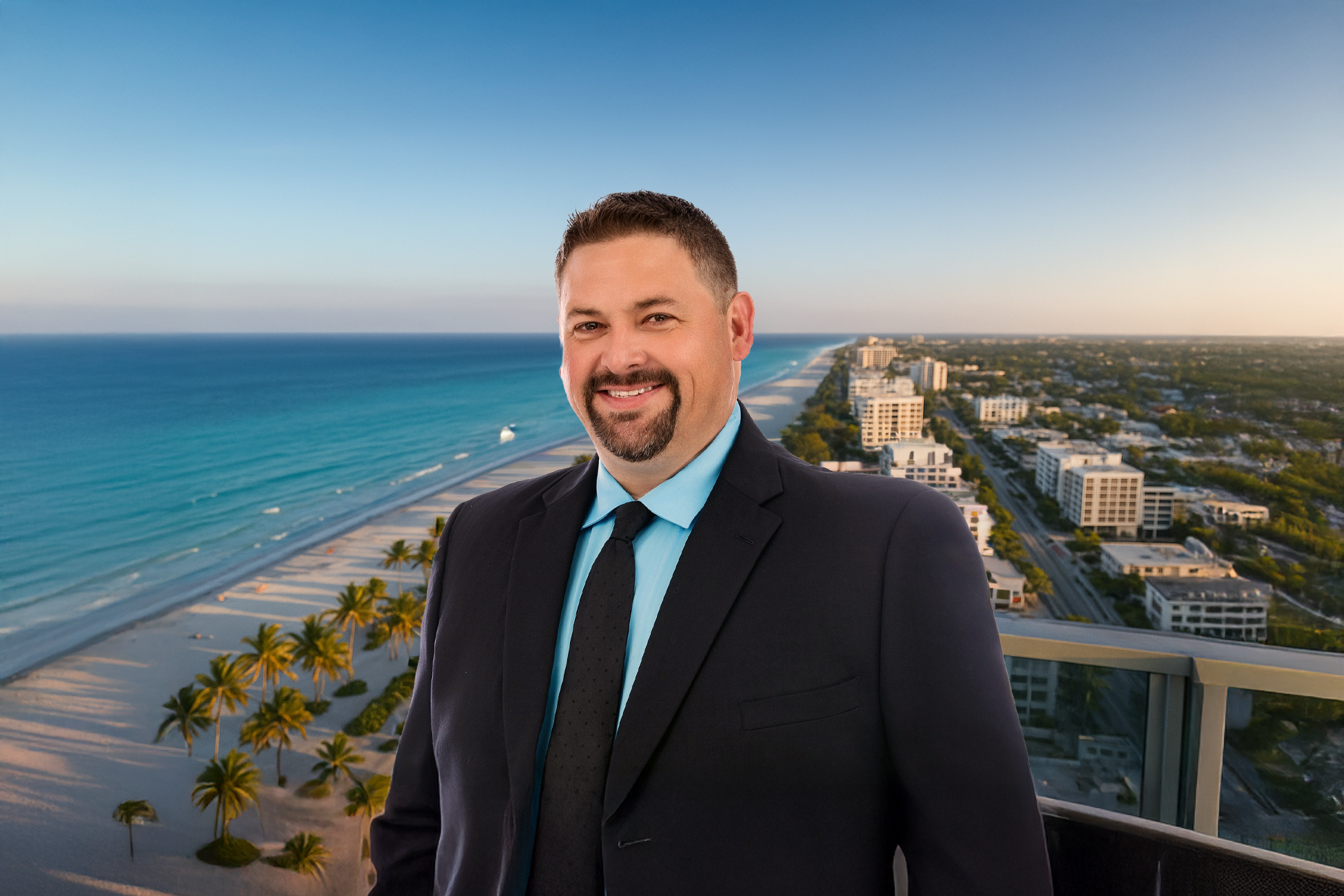
Who you are actually working with
Broker / Owner, REALTOR® · TrustLine Real Estate LLC
Scott Lee is a REALTOR® and a member of the National Association of REALTORS®, the Daytona Beach Area Association of REALTORS®, and the Flagler County Association of REALTORS®. That membership is not decoration: it means he is bound by the REALTOR® Code of Ethics, which sets a higher standard than Florida license law alone and is enforceable through the local association’s own grievance process. If TrustLine ever falls short of it, you have somewhere to go that is not us.
Scott Lee is the broker of record and the owner of TrustLine Real Estate LLC. In practical terms that means the license behind every transaction here is his, the escrow account is his responsibility, and there is nobody above him to escalate to when a decision needs to be made. It also means he is the person you deal with — not a coordinator, and not a junior associate carrying twelve files at once.
He works a deliberately limited number of clients at a time. That is a business decision with a visible trade-off attached, and it is the same one described further up this page: less coverage on a busy Saturday, far more depth on your particular property. When you ask why the counteroffer was worded that way, or what the association minutes said about the roof assessment, the answer comes from the person who read them.
His approach to advice is to give you the version he would want to be given: the number the comparable sales actually support, the flaw in the house you are already emotionally attached to, the reason a cash offer several thousand dollars lower can be the stronger one. Buying or selling a home is a large financial decision that people make with a great deal of feeling attached, and the job is to keep the arithmetic visible while you decide.
If you want to verify any of this before you call, Florida broker licenses are public record. His is Florida Broker License #BK3590406, searchable through the Florida Department of Business and Professional Regulation. Checking is a reasonable thing to do, and we would rather you did it early.
Operating standards
Every brokerage in the state describes itself as responsive and trustworthy. Adjectives are free. Below is what each of those words is supposed to mean in practice, so you have something specific to hold us to — and something specific to complain about if we miss.
You get the same answer whether it helps the deal or not. If we can see a problem — an open permit that was never closed out, a roof at the end of its insurable life, an association with thin reserves — you hear about it before you write the offer, not after the inspection report lands.
Calls and texts get a reply the same business day. When the real answer needs another day or two, because we are waiting on a title search, an estoppel letter, or a lender, you are told that instead of hearing nothing.
Contracts get read line by line before you sign them. You will be told what an inspection period, a financing contingency, or the AS IS right of cancellation actually obligates you to do, by what date, and what changes if that date passes.
Every transaction runs on a written date list: effective date, inspection deadline, loan application, appraisal, association approval, walkthrough, closing. You get a copy of it. Nothing that matters lives only in somebody's memory.
Advice starts from what is achievable in this price range this month. If two weekends of paint, mulch, and decluttering will return more than they cost, we say so. If the smarter move is to list as-is and price for it, we say that instead.
Fees, the terms of representation, and who is expected to pay whom go in writing before you commit to anything. If TrustLine Real Estate has any interest on the other side of a transaction, you hear it immediately and in writing.
Notes get taken and then used. If you said in March that a single-story floor plan and a screened porch were non-negotiable, you are not being sent two-story listings in June to pad the count.
Your motivation, your timeline, and the top of your budget stay with us unless you instruct otherwise. Repairs, credits, and extensions get documented as signed addenda rather than settled on a phone call.
Transactions come apart over appraisal gaps, insurance quotes, failed inspections, association denials, and slow underwriting. Every one of those has options. You get the options with the trade-offs attached, not a shrug and a cancellation form.
No pressure to decide on the day you tour a house, no chasing you for a signature, no guilt about the third property you walked away from. You set the pace and we keep the process moving inside it.
How we communicate
Most complaints about real estate professionals are not really about competence. They are about a client sitting in silence for nine days wondering whether the appraisal came back. Here is how that is avoided.
Under contract, you get an update at least once a week, including the weeks when the honest update is that nothing moved. Anything that puts a deadline, a document, or a decision in front of you comes the same day it happens.
Call, text, or email. Tell us at the first meeting which one you actually read and that is the one we use. Anything that changes your obligations — price, dates, repairs, or terms — is confirmed in writing as well, whatever channel it started in.
Scott Lee. No call center, no rotating duty agent, no assistant opening your file for the first time. The direct line is the same one you were given on day one, and it still works after closing.
Some of the working day is spent inside other people’s houses, at inspections, or at a closing table where a phone should be face down. During those windows you will usually get a text back rather than a call, and a proper call when he is out. If something is time-critical, say so in the first line of the message and it moves to the front of the line.
If you have not heard anything by the end of the business day, call again. We would much rather field a second call than discover on Friday that a message never arrived.
A seller who is “happy to leave the washer and dryer,” a lender who is “sure” the extension will be approved, an agent who says their client will handle the roof repair before closing — none of that is binding on anyone. Anything material that gets agreed by phone is confirmed the same day in writing, and if it affects your obligations it goes into an addendum with a date and a signature.
It is a small amount of extra paperwork that prevents the single most common late-stage argument in a residential transaction.
These are service commitments we set for ourselves, not performance statistics.
What we do not do
Anyone can list their virtues. It is more useful to be specific about the behavior we have ruled out, because that is the part you can actually catch us breaking.
| Where it comes up | What can happen | What we commit to instead |
|---|---|---|
| Pricing a listing | The listing appointment is won by quoting the highest number in the room, followed by three price reductions in ninety days. | You get the number the comparable sales support, with the comparables attached. If we cannot defend a price to an appraiser and to a buyer agent, we will not put the house on the market at that price. |
| Urgency | Manufactured pressure: competing offers that never materialize, a deadline that exists mainly to get a signature tonight. | If there is competition, you are told what we actually know and how we know it. When we do not know, we say we do not know, and you decide with that uncertainty visible rather than hidden. |
| Brokerage relationship | How you are represented changes partway through, buried in a form handed across a kitchen table with six others. | Florida presumes transaction broker status unless something else is agreed in writing. You get the difference explained in plain language first, and a move from single agent to transaction broker requires your signed consent before it happens, never after. |
| Both sides of one deal | "Dual agency" language — a relationship Florida law does not permit — used to paper over a conflict of interest. | If TrustLine Real Estate holds the listing on a property you want to buy, you hear it immediately and in writing, with exactly what we can and cannot do for each side, and with your option to be represented by another brokerage spelled out. |
| Repairs and side agreements | Do not worry about it, they said they will take care of that before closing. | If it matters, it goes into a signed addendum with a date attached. A verbal promise from the other side is not enforceable at the closing table, and we will not let you rely on one. |
| After closing | The agent goes quiet once the commission has cleared. | You keep the same direct line. Questions about the March 1 homestead exemption deadline, a permit you inherited, a warranty claim, or the first tax bill do not expire at the closing table. |
| Work outside our lane | The file gets taken anyway, and the learning happens on your transaction. | You are told plainly that it sits outside what we do well, and referred to somebody who works in it every week. That is a much shorter conversation than an expensive mistake. |
The middle column describes practices that exist in this industry. It is not an accusation aimed at any particular brokerage or licensee, and plenty of excellent agents work nowhere near it. The right-hand column is what we have committed to instead.
Where we work
Volusia & Flagler Counties, Florida is the core of the practice. Coverage is deliberately bounded: pricing on this coast changes by neighborhood, by flood zone, and sometimes by which side of a canal you are on, and that is not knowledge anyone holds for the whole state at once.
From the oceanfront condominium corridor to the historic mainland and the SunRail commuter belt, Volusia is the market we work most weeks of the year.
Palm Coast section by section, the low-rise beach town to its south, the coastal hammock to its north, and the acreage west of the interstate.
Clients move north to St. Johns County and southwest toward the Orlando corridor often enough that we work there too — and when a move goes further, we hand you to a vetted agent and stay involved.
If your search is outside this area, say so early. We will tell you honestly whether we are the right brokerage for it, and if we are not, we will place you with an agent who works that market every week and stay reachable until you are settled. Full detail on each community sits on the areas we serve page, and active inventory is on the property search.
Questions we get asked
Most licensees you meet in Florida are sales associates. A sales associate has to work under a licensed broker, and it is the broker who carries responsibility for the office: the escrow account, advertising compliance, record keeping, and the conduct of every licensee registered under them. A broker license requires additional education and licensed experience beyond the sales associate level.
Scott Lee holds a broker license and owns this brokerage. Practically, that means when something needs a decision — a repair credit, an escrow question, an unusual closing structure — there is no layer above him waiting to be consulted first.
Real estate compensation in Florida is negotiable. It is not set by law, by any board, and there is no standard rate — anyone who tells you otherwise is wrong.
On a sale, the listing side fee is agreed with you in the listing agreement before the property goes live, and whether any amount is offered to a buyer brokerage is a decision you make, not an automatic figure.
On a purchase, what your broker is paid and who is expected to pay it — the seller, the listing brokerage, you, or some combination — is put in writing before we start touring homes, and it becomes a negotiating point in the offer like any other term. If any of that changes during a transaction, you hear about it before you are asked to sign.
It takes about forty-five minutes and it happens wherever works for you: in person, by phone, or on video.
We ask what you are trying to do and by when, what has to be true about the property, and where your financing stands. We walk through the Florida brokerage relationship options so you know what you are choosing before anything is signed. Then you get a straight read on your timeline against your price range, including the case where the two do not line up yet.
Nothing is signed at that meeting unless you want to sign something. If this is not the right brokerage for what you need, that is the meeting where we say so.
Ask us. Some of it we do routinely, some of it sits at the edge of what we do well, and some of it belongs with a specialist.
You will get a direct answer about which of those three your situation falls into. If it is the third one, we will point you toward somebody who works in that space every week rather than taking the file and learning on your money.
Florida recognizes three brokerage relationships: single agent, transaction broker, and no brokerage relationship. Under Florida law a licensee is presumed to be operating as a transaction broker unless a different relationship is established in writing.
A transaction broker provides limited representation to a buyer, a seller, or both. The duties owed include dealing honestly and fairly, accounting for all funds, using skill, care, and diligence, presenting all offers and counteroffers in a timely manner, disclosing known facts that materially affect the value of residential property and are not readily observable, and limited confidentiality. Limited confidentiality means certain facts are protected unless you waive them — for example that a seller will take less than the asking price, or that a buyer will pay more than the offer on the table.
A single agent represents one side only and adds fiduciary duties on top of that: loyalty, confidentiality, obedience, and full disclosure. Single agent representation has to be disclosed in writing before, or at the time of, entering into a listing or representation agreement, or before showing property, whichever happens first. Changing from single agent to transaction broker partway through a transaction requires your signed consent first.
Neither one is automatically better. Which fits depends on the property, on who else is involved, and on what you most need protected. You get the trade-offs explained in plain language rather than a form to initial.
Call, but tell us. If you have signed a representation agreement with another brokerage, that is a contract and we are not going to interfere with it.
We will answer a general question and suggest you raise the issue with your agent directly, because most of what goes wrong is a conversation rather than a reason to switch. If your agreement has expired, or you never signed one, you are free to work with whoever you choose.
Nothing on this page is legal, tax, or financial advice. For the questions that need it, we will tell you to speak to an attorney, a CPA, or a lender — and usually who to call.
Where to go from here
Representation from the first search filter through the final walkthrough: what to offer, what the inspection actually found, and when to walk away from a house you like.
A price you can defend, preparation that pays for itself, a marketing plan you see in advance, and a candid read on what this market will bear right now.
A small brokerage, a broker who answers the phone, mentoring on live files rather than in a monthly meeting, and an honest conversation about whether this is the right environment for the way you work.
Still deciding whether any of this applies to you? Call (386) 866-3406 and ask. A short conversation costs nothing and there is no follow-up campaign attached to it.
Let's talk
Whether you are twelve months out or under contract next week, a short conversation costs nothing and usually saves time later. You will speak with Scott Lee, not a call center.